algae-biofuel-production

Algae Biofuel

What is Algae? Alage is a primitive chlorophyll-containing mainly aquatic eukaryotic organisms that lack true stems and roots and leaves. Algae is considered to be one of the  most efficient organisms on More »

biofuel-bioethanol-production

Bioethanol Production

It seems that Biodiesel has been getting all the press recently leaving Bioethanol largely unexplained and feeling somewhat left out. I find the lack of details for Biothanol quite disturbing. So after More »

Senators propose biofuel shake up with end to ethanol subsidies

US Senators

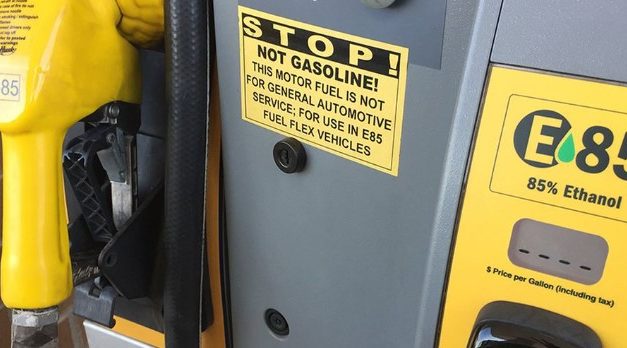
End of US ethanol subsidies?

The US, and by extension global, biofuel market could be on the verge of a major shake up, after a bi-partisan group of senators yesterday tabled a new bill that would end the generous subsidies provided to US ethanol producers and axe the tariff imposed on ethanol imports.

The group, led by Democrat senator Dianne Feinstein and Oklahoma Republican Tom Coburn, argued that the 45c per gallon tax credit provided to oil refiners for each gallon of ethanol they blend with gasoline was no longer justified given the scale of the US deficit.

The tax break is expected to expire this year, but the senators argue that repealing the necessary legislation before 1 July would save the US government about $3bn.

The new bill would also repeal the 54c per gallon tariff imposed on ethanol imports – a move that could open up the fast-expanding US biofuel market to imports from Colombia and Brazil. Supporters of the bill claim that the tariff makes the US more reliant on fossil fuel imports as it stops imports of cheaper ethanol.

Europe’s biofuel dispute splits the industry

Eu Flag

Europe's biofuel dispute splits the industry

A divisive European debate over the green credentials of biofuels has stalled investment and threatens the future of some producers, but could also create lucrative opportunities, companies said on Tuesday.

After a two-year investigation, the European Commission has decided that the complex issue of “indirect land use change” (ILUC) can lessen carbon savings from biofuels. In July it may announce moves to curb the least sustainable — possibly by raising an EU-wide sustainability benchmark.

“Such a factor would render the European biofuel industry no longer viable,” the European Renewable Ethanol Association and the European farmers’ body Copa-Cogeca said on Tuesday. “ILUC is far too complex an issue for any quick policy fix.”

The battle over ILUC has thrown into doubt EU plans to create a $17 billion annual market for biofuels from producers such as France, Germany, Brazil, Malaysia and Indonesia.

“It has sent a lot of signals to investors that the policy environment is uncertain,” Kare Riis Nielsen, head of EU affairs at Danish enzymes producers Novozymes, told Reuters. “The whole industry is suffering from that.”

But the very greenest of biofuels, such as the next-generation biofuels Novozymes is involved in creating, could also benefit from the EU’s review of biofuels strategy.

“What’s most important now is that we come out of this with crisp, clear signals to the investment community and consumers,” said Nielsen. “ILUC could create a window of opportunity.”

WHAT IS ILUC?

The concept of “indirect land-use change” is relatively new, and still being developed, so it is not surprising that industry is reluctant to accept it.

In essence, it means that if you take a field of grain and switch the crop to biofuel, somebody somewhere will go hungry unless those missing tonnes of grain are grown elsewhere.

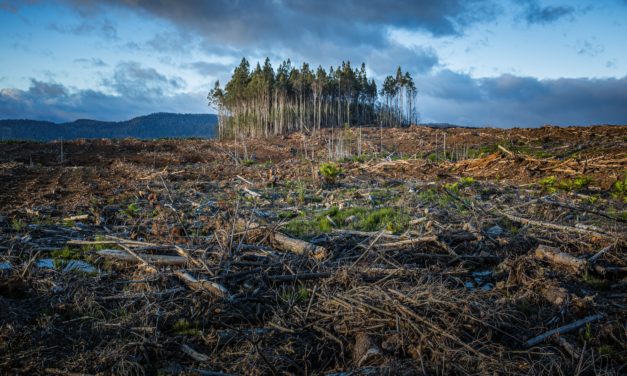
The crops to make up the shortfall could come from anywhere, and economics often dictate that will be in tropical zones, encouraging farmers to cut out new land from forests.

Burning forests to clear that land can pump vast quantities of climate-warming emissions into the atmosphere, enough in theory to cancel out any of the climate benefits the biofuels were meant to bring.

The Commission has run 15 studies on different biofuel crops, which on average conclude that over the next decade Europe’s biofuels policies might have an indirect impact equal to 4.5 million hectares of land — an area the size of Denmark.

Some in the biofuels industry argue that the science is flawed and that the issue could be tackled by a major overhaul of agricultural strategy to improve productivity or by pressing abandoned farmland back into action.

Waste products from biofuels production can also be fed to animals, reducing the pressure on land resources.

EU sources say July’s announcement by the European Commission will broadly endorse the green credentials of bioethanol but raise questions about some sources of biodiesel.

It will also create pressure to speed up the adoption of next-generation biofuels from agricultural residues such as straw, which do not create ILUC and are no longer just a dream, says Novozymes. “It’s not yet cost-competitive, but it will be,” said Nielsen. “The volatility of oil prices makes it a tough guess, but probably by 2020 it can compete with gasoline.”

However, the EU biofuels strategy has so far failed to help next-generation fuels take off and needs tweaking, he added.

“There is no longer a technical barrier. It is a political barrier. We need to incentivise the best performing biofuels. We need support for those that take the first-mover disadvantage.”


China Set to Increase Use of Biofuels, reduce CO2 emmissions

biofuel model china

A model of a biofuel plant at a new-energy exhibition in Beijing

China can become a leader in the production of second-generation (2G) biofuels, made from agricultural waste instead of foodstuffs, such as sugar, starch and vegetable oils said a senior executive from one of the industries’ leading companies.

That’s as the nation attempts to improve energy efficiency and reduce reliance on fossil fuels.

“The United States is the biggest producer of first-generation (1G) biofuels. Regarding 2G production, no other country has shown leadership, so maybe China will move faster on this because it has been put on the political agenda,” said Michael Christiansen, president of Novozymes (China) Investment Co Ltd, referring to the nation’s 12th Five-Year Plan (2011-2015).

Christiansen made the remarks in an exclusive interview with China Daily on April 15 at Boao, a small town on the east coast of Hainan province, where he was attending the annual “Forum for Asia” conference.

The Denmark-based Novozymes is the largest provider of industrial enzymes and market leader in enzyme technology for biofuels.

Christiansen said Novozymes has a market share of about 50 percent in China in 1G biofuel production, but more opportunities will be created as the nation’s new Five-Year Plan places a heavy focus on 2G production, although detailed plans are not yet available.

Global biofuel consumption will increase from the current level of 55 million tons of oil equivalent – the amount of energy obtained by burning one standard barrel of oil – to 750 million tons in 2050. Meanwhile, over the same period, the proportion of biofuel used in the transportation-fuel market will rise from 2 percent to 26 percent, with 2G biofuels accounting for roughly 90 percent of all biofuels used, according to a report by the International Energy Agency.

By developing 2G technology, China can reduce the import volume of crude oil, and reduce CO2 emissions by 90 percent from current levels, he said. “It fits perfectly with China’s next Five-Year Plan to reduce inefficiency.”

The nation has announced plans to reduce CO2 emissions by 40 to 45 percent by 2020. It’s expected that energy consumption of non-fossil fuels could account for more than 11 percent of the country’s total energy consumption by 2015.

Christiansen suggested that between 2.4 and 2.8 percent of China’s total energy consumption could be produced from biomass (organic material) by that date. “That’s a big increase compared with the existing situation – five, seven or even 10 times more.”

Currently, Chinese annual biofuel production stands at 2 million tons, he estimated.

In addition, 2G biofuel production could benefit the economy with less effect on food supply and prices.

“1G biofuel has become very popular, but we worry that if it becomes too popular, too much food goes into the production of biofuels. Production of the fuel from agricultural waste will have a lower effect on food prices.”

Food security concerns have led the government to restrict grain-based ethanol production and to promote non-grain-based fuel ethanol production instead, according to a report by the World Economic Forum (WEF) in June 2010.

In May 2010, Novozymes, China National Cereals, Oils and Foodstuffs Corporation, and China Petrochemical Corporation announced the construction of a 10,000 ton-capacity demonstration plant for commercial-scale production of advanced biofuels from corn stover – the leaves and stalks of maize plants – which will begin this year.

“By the end of 2011, we plan to take the next step moving from a pilot scale, which is 20 times bigger than what we have today. Then by 2013, we will move to a commercial size, which will be somewhere between 50,000 and 100,000 tons,” said Christiansen.

In common with other companies in the industry, Novozymes is also eyeing China’s biochemical market, he said.

In April 2010, Novozymes and Dacheng Group, a leading corn processer located in Jilin province, made an agreement to make plastics from agricultural waste.

The companies have agreed to expand their cooperation in developing biochemicals derived from biomass and to promote production of plant-based glycol. Now the two are evaluating different production methods.

Christiansen predicted the company will maintain an annual growth rate of around 20 percent in the biofuel and biochemical business in China over the next five years.

“That’s a lot of fantastic benefits in this. We are in the starting phase of creating a new industry. The new ways of producing chemical and fuels will take time. In five years, we will see a more mature industry.”

According to the WEF report, the conversion of biomass into fuel, energy and chemicals has the potential to generate upwards of $230 billion for the global economy by 2020.

China’s use of biofuel ethanol will reach 12.7 billion liters by 2020, while automotive ethanol gasoline usage will be 100 percent, and annual consumption of biodiesel will reach 2.3 billion liters, according to the targets set by the National Development and Reform Commission.


Michigan State University gets $2.9 million for biofuel research

Michigan State University gets $2.9 million for biofuel research

Michigan State University has received $2.9 million in federal grants for biofuel research.

The U.S. Department of Agriculture awarded five-year grants for three projects focusing on various aspects of producing biofuels, which use renewable plant materials instead of petroleum.

“Americans who are now going to the gasoline pumps and dealing with sticker shock know that we need to find other ways of doing things in this country,” said Kathleen Merrigan, U.S. deputy secretary of Agriculture.

Most gasoline blends sold in the United States contain at least 10 percent of the biofuel ethanol. Nine billion gallons of biofuel were blended into transportation fuels in 2008, and the federal government is calling for 36 billion gallons by 2022.

Merrigan visited MSU on Wednesday to talk about the grants and tour research facilities at MBI International. MBI, based in Lansing and part of the MSU Foundation, helps prepare bio-based technologies and innovations for commercial use.

Overall, the USDA awarded $36.3 million in competitive grants to 27 universities, one college and two USDA research arms for sustainable bioenergy research.

It’s a significant win for MSU, which will use the money to pay faculty and student researchers and fund other project costs, said Doug Gage, director of the MSU BioEconomy Network.

“We are very proud that our faculty are competing against the best in the country and wining awards,” he said.

MSU professors will lead the three research projects on campus that look at topics such as greenhouse gas emissions associated with biomass production and ways to use byproducts from the production of biofuel.

Entomology professor Doug Landis is researching pests that affect switch grass, a plant used to produce biofuels.

Biofuel research is moving away from food plants such as corn in favor of non-food crops or plant waste products.

“It would be inappropriate to place a crop into the landscape that would then cause a spillover effect on our current crops,” Landis said.

Landis will work with other MSU professors and students to conduct research on farms throughout southern Michigan.

“MSU is doing cutting-edge research here on biofuels,” Merrigan said. “They’ve made significant investments, they’re bringing together a variety of disciplines in their scientists to come together and sort of really deconstruct problems, figure out answers.”

Landfill sites set to harvest biofuel crops

Landfills sites to grow Biofuel crops

Growing biofuel crops on landfill sites will soon be a reality as Waste Recycling Group (WRG) looks to generate renewable energy from former rubbish dumps.

The company has begun planting a combination of miscanthus grass and short rotation coppice (SRC) at 14 of its landfill sites across Lincolnshire, Nottinghamshire, Humberside and Yorkshire.

The grass and SRC have been introduced as biofuel crops over a total area of 100 hectares following a successful three-hectare feasibility project at the former Breighton landfill site, near Selby, East Riding of Yorkshire.

The project has attracted grant funding from Natural England and next year will see an additional 100 hectares planted at a mixture of operational and closed sites across the UK.

The plan is to sell the energy crops, once harvested, to Drax Power Station in Selby as a biomass fuel.

Miscanthus – or elephant grass – is a high-yielding energy crop that can grow up to 3m tall and produces a crop every year without the need for annual replanting.

Its rapid growth, low mineral content and high biomass yield make it an ideal biofuel. It thrives in poorer quality soils and provides excellent habitat for various forms of wildlife.

Harvesting will begin after the third year of planting and is expected to generate between 8-12 tonnes per hectare. The grass has a 30-year lifecycle and will be harvested annually.

WRG is believed to be the first waste management business of its kind to undertake an energy crop initiative of this scale.

In addition to miscanthus, WRG also successfully harvested five hectares of SRC at its closed Burntstump Landfill, near Arnold in Nottinghamshire, in 2011 which will be the first biomass crop the company has marketed to Drax.

WRG’s senior restoration and energy crop manager, Mark Pailing, said: “This is a very exciting development for the company and builds on our track record of sustainable reclamation, recycling and regeneration.”

WRG is also hoping to expand its use of short rotation coppicing for leachate treatment at selected landfill sites in next few years.

Biofuel Polar Performance Vehicle going for record time to south pole

Biofuel truck heading for the south pole

The giant information firm Thomas Reuters is sponsoring a team to break the record for fastest time to the South Pole by land. That’s right, a race to the South Pole. On land. In the winter.

The truck that the three man team will be racing is called the Polar Performance Vehicle, and, as Jalopnki pointed out, is apparently based on the same Polar Performance Vehicle platform that the show Top Gear employed to drive to the North Pole. The renewable vehicle is run off an unspecified, but stated low-CO2 biofuel that powers a 320 bhp, 4 liter V6 engine.

The truck is also equipped a solar cell system and a wind-powered generator, so should some components fail, communications power will still be possible. With 44″ wheels, 32 gears, protection bars, a crush-proof passenger cab, and a real-time GPS satellite tracking system, the Polar Performance Vehicle is preparing to take on some harsh

Algae biofuels could significantly reduce oil imports

biofuel algae

Algae biofuels could significantly reduce oil imports

According to current US legislation, biofuels will play a major role in our transportation future. By 2022, the Energy Independence and Security Act dictates that over 10 percent of our current petroleum consumption be replaced by biofuels, with over half that quantity coming from something other than corn. Although ethanol produced from the cellulose in plant waste and dedicated biofuels crops is already in use, many are looking further ahead at biofuels made from algae, which have some distinct advantages. Yesterday, some researchers at the Department of Energy released a study in which they describe a model that can help us determine just how much biofuel we might be able to squeeze out of algae.

At least for the first run, however, they used some pretty unrealistic starting points to just get a sense of how various assumptions influenced productivity. But the model produced some eye-popping numbers: if we maxed out algal productivity, we’d need to use several times the US’ annual irrigation water consumption to do so, but we could replace half of our current petroleum imports.

As pointed out by the authors, algal biofuels have several distinct advantages. The microorganisms have a short life cycle and grow and reproduce rapidly, so their productivity is significantly higher than that of most crop- or vegetation-based biofuels. It’s also possible to harvest fats and lipids from them, which can be efficiently converted into biodiesel—the process requires less energy, and the fuel can be used in existing vehicles. Finally, algae have adapted to just about any water condition imaginable. We can choose species that will grow in saltwater, fresh water, agricultural runoff, municipal sewage—you name it.

That said, we’re still not sure about how best to grow them. For efficient growth, temperatures would need to be held within an optimal range (including during winter), and water evaporation and use in metabolism would require a constant supply. Closed systems can minimize these problems, but they have much higher energy and maintenance costs. Figuring out what future productivity could look like depends a lot on what assumptions you make regarding choices like siting, type of facility, etc.

The authors have created a model that lets some of those choices be tested. Their system can let a user select a specific type of land (flat land that is not in use for agriculture, for example) on which to locate a facility. Thirty years of weather records can be used to estimate how often the facility would need to heat the water the algae are growing in, how much sunlight would be available for growth, how fast water might evaporate from open ponds, and so on. Based on all of these parameters, the model can produce figures like water requirements and productivity.

It sounds like a very useful tool, but its output is necessarily going to be sensitive to various input parameters, which will ultimately mean that it can be used to produce radically different figures. For example, it’s easy to focus on the half of oil imports figure, which is an estimate of how much we can get from the model if we try to maximize production of algal biofuels. That figure, however, is derived from some very specific assumptions that are, in many ways, unrealistic.

Even for the more realistic scenarios, the list of caveats is pretty extensive: water and nutrients are unlimited, only evaporation is considered, only open ponds are used, and the authors ignore the energy demand involved in keeping the ponds from freezing or processing the algae into fuel. The authors also go exclusively with open ponds instead of closed systems. These are simpler to build, but have their own difficulties: they are harder to maintain at appropriate temperatures, they lose lots of water to evaporation, and they need to be built where it’s relatively flat.

By using the geographic data, the authors were able to find areas in the US that were appropriately flat, sparsely populated, and not currently being used for agriculture or protected as part of a park; that turned out to be over five percent of the continental US, largely in the Southeast, along the Great Lakes, and scattered throughout the West. The most productive areas were where the sun is brightest, in the desert southwest of Arizona, New Mexico, and West Texas. If all the appropriate land in the US were given over to biofuels, the weather would allow it to produce 220 Gigaliters/year, about half of our current oil imports. However, we have nothing like the freshwater needed to do that.

So the authors balance productivity against water requirements, and that rules out some of the most productive areas, given that evaporation in the desert is very high. In this analysis, the areas around the Great Lakes do well even though they aren’t very productive, since the cooler temperatures cut down on the evaporation; the Southeast’s Atlantic seaboard also does well due to high humidity. Given a reasonable water use cutoff, these areas could produce the equivalent to 17 percent of our current oil imports, while using only a quarter of our current irrigation water.

That’s still quite high, but remember that this assumes unpolluted freshwater. The areas along the Gulf and Atlantic cost could easily use a combination of saltwater and municipal waste. The latter source could potentially provide for facilities in some of the areas in the Southwest that are otherwise ruled out due to their high water use.

These latter points are, by the authors’ own admission, beyond the scope of the paper. The degree to which these approaches have a return on energy use will also be a critical factor to consider. But the authors actually indicate that they hope others will use their models to do more detailed analysis with alternate water sources and algal growth methods. Ideally, if they’re taken up on this offer, we’ll have a clearer picture of the potential of algal biofuels.

Thanks and Source arstechnica.com

Relax biofuel laws to help ease the food crisis, World Bank says

world bank biofuel

Relax biofuel laws to help ease the food crisis, World Bank says

The World Bank has called for the relaxation of laws requiring crops to be blended into petrol, saying that they are contributing to the global food price crisis.

Robert Zoellick, the President of the Bank, said that a “toxic brew” of higher food and fuel costs was heightening popular unrest in regions such as the Middle East and North Africa and condemning millions more people to poverty.

Among the many causes of high food prices are rules in countries, such as the United States, that require a certain percentage of petrol to come from corn-based ethanol.

Some 31 per cent of the corn produced in the US in 2008 was turned into ethanol, and government forecasts show that this will hit 40 per cent this year.

Biofuels have been a cornerstone of American attempts to reduce its dependency on imports of oil from the Middle East and elsewhere.

Hassan Zaman, a World Bank economist, said that although the Bank was not advocating the abolition of these laws, it believes that they should be relaxed when food prices surge beyond certain thresholds.

The World Bank also urged governments to spurn restrictions on exports of grains, bolster supplies of information on food stocks and build on the $US7 billion ($6.6bn) a year that the Bank is investing in agricultural production and irrigation.

An increase of only 10 per cent in the World Bank’s food prices index could propel another ten million people into “extreme poverty”, where they live on less than $US1.25 a day, Mr Zoellick said as he opened at the latest meetings of the Bank and the International Monetary Fund.

He added: “Mix in price gyrations and then stir in higher fuel costs, and you get a toxic brew causing real pain and contributing to social unrest.”

Luc Lampriere, of Oxfam, said: “Immediate action must be taken to address underlying factors driving food prices and volatility, which are excessive speculation and demand for biofuels.”


Volvo’s C30 Electric Generates Heat With Bio-Ethanol

Volvo C30 EV

Volvo is preparing to launch its C30 Electric vehicle but it has a unique twist. This car uses bio-ethanol to generate heat in the winter to keep passengers toasty warm. It is unusual in that the heater doesn’t draw power from the battery and thus doesn’t affect the driving range of the electric car (EV). The announcement came in conjunction with Volvo’s successful tests to drive the C30 Electric in extreme cold temperatures up to -20 degrees Celsius. In the past, some electric vehicles have struggled in winter conditions with the stress of cold temperatures significantly lowering the driving range of the EV.

Lennart Stegland, Director of Volvo Cars’ Special Vehicles said of the more than 200 tests they have performed on the EV, “We must ensure that the C30 Electric performs as intended when driving, parking and charging in a variety of conditions, from normal to very cold or hot. Northern Sweden is the perfect place to do sub-zero temperature testing.”

Speaking of climates, the C30 Electric has three climate systems. One system cools or warms the battery pack as necessary, and another climate system uses water to cool the electric motor and power electronics. The final climate system supplies passengers with heating or cooling and this system runs on bio-ethanol. The car’s ethanol tank holds up to 14.5 litres of bio-ethanol. It is also possible to operate the heater and air conditioning using electricity from the batteries. In electric mode an immersion heater warms up the coolant in the climate unit.

“The driver can program and control the climate unit to suit the trip. Ethanol is the default mode that is used when the battery capacity is needed for driving extend mobility to its maximum. However, on shorter distances electricity can be used to power the climate system,” concluded Stegland.

Poplar Trees Possible Candidate for Biofuels

Trees that aid biofuel production

Researchers at the Department of Energy’s BioEnergy Science Center may have discovered some clues that could lead to poplar trees as the next candidate for biofuels. The research is being led by Charles Wyman of the Bourns College of Engineering’s Center for Environmental Research and Technology at the University of California Riverside who is joined by teams from Oak Ridge National Laboratory and the National Renewable Energy Laboratory. They published their findings in the Proceedings of the National Academy of Sciences, “Lignin content in natural Populus variants affects sugar release.”


Basically, the team is looking for traits in poplar trees that will lead to better sugar release. The lignin found in the plant’s cells have been a major challenge to overcome in biofuel production because it must be converted to sugar for production; yet, its strong sugar bonds interfere with access to the carbohydrates, and thus access to the sugar.

Wyman explained, “The real driver for bioenergy is how to get sugar as cheaply as possible from these recalcitrant materials. We’re looking for clues as to which traits in these poplar materials will lead to better sugar release.”

The BESC researchers were able to quickly analyze volumes of poplar core samples through the use of a high-throughput screening method. The goal was to better understand the chemical factors that drive sugar yields. The work resulted in finding a correlation between one plant trait, the syringyl/guaiacyl (S/G) ratio, which are the building blocks of lignin, and increased yields.

“The conventional wisdom is that high lignin contents are bad for sugar release,” said lead author Michael Studer. “We unexpectedly found that this statement is only valid for low S/G ratios, while at high S/G ratios lignin does not negatively influence yields. However, replacement of carbohydrates with lignin reduces the maximum possible sugar release. Another interesting result was that the samples with the highest sugar release belonged to the group with average S/G ratios and lignin contents. This finding points to a need for deeper understanding of cell wall structure before plants can be rationally engineered for efficient biofuels production.”

During the project, the research team was able able to pinpoint certain popular samples that produced remarkably high sugar yields without pretreatment – a typical prerequisite in biomass to biofuel production. This could help to reduce the costs of production. The team believes that their research may lead the way for poplar cultivars to be grown for commercial testing and propagation and ultimately for biofuel production.